
In a world where conscious consumption is more than just a trend, sustainable coffee represents a fundamental challenge for the industry: reconciling the pleasure of a good cup with environmental and social responsibility.
What is sustainable coffee and why is it important?
When we talk about sustainable coffee, we mean a production model that protects the environment, respects human rights, and is economically viable over time.
What is organic coffee?
It is the answer to intensive farming. It refers to coffee grown in total harmony with nature, without the use of synthetic pesticides and chemical fertilizers.
What is fair trade coffee?
It is coffee coming from an ethical supply chain that guarantees fair prices to small-scale farmers, environmental sustainability, the absence of child labor, and respect for human rights.
Relationship between sustainable, organic, and fair trade coffee
| Concept | Main Focus | What does it guarantee? |
| Sustainable Coffee | Comprehensive (Environmental, Social, and Economic) | The long-term balance between ecosystem protection, social equity, and the economic profitability of the entire supply chain. |
| Organic Coffee | Environmental | Cultivation without synthetic pesticides or chemical products, respecting the biological cycles of the soil and consumer health. |
| Fair Trade Coffee | Social and Economic | A fair price for the producer, protecting them from market volatility and strictly prohibiting labor exploitation. |
Benefits of sustainable coffee
Protection of biodiversity
The conservation of ecosystems is vital. According to the report Coffee’s Innovation Crisis by World Coffee Research, investments in innovation are fundamental to closing the productivity gap caused by the climate crisis, which threatens to drastically reduce the areas suitable for Arabica cultivation by 2050.
Economic equity
Guarantee of fair and dignified compensation. Data transparency and the profitability of small farms are the only pillars capable of ensuring a supply chain free from exploitation.
Social responsibility
Total elimination of labor exploitation at every link in the chain, promoting safe working conditions and the development of coffee-growing communities at the source.
Total traceability
A commitment to absolute transparency “from finca to cup,” allowing the consumer to know the exact journey of their coffee and the positive impact generated by their purchase.
How to recognize truly sustainable coffee?
Identifying a truly responsible product requires looking beyond the packaging and focusing on the total transparency of the supply chain.
Supply chain transparency: it is essential to verify clarity at every stage of the supply; an ethical brand is not afraid to show its entire process.
Certifications and marks: identifying recognized labels is a good starting point, but it must always be accompanied by research into the company’s history and real values.
Technical details and origin: high-quality coffee always provides precise information about the plantation, cultivation altitude, and processing methods (washed, natural, etc.).
Quality and traceability: the presence of these technical data is the clearest sign of controlled and honest management, where excellence in taste is directly linked to the ethics of its production.
Buying Guide: Where to buy quality sustainable coffee?
Many consumers wonder where to buy quality sustainable coffee without compromising on ethics and taste. If you are looking for an authentic and responsible experience, the choice of format and purchase channel is fundamental to ensuring that your investment supports truly fair practices.
Sustainable whole bean coffee: we always recommend whole bean coffee. In addition to better preserving aromas and oils, it reduces the carbon footprint by avoiding unnecessary industrial grinding processes.
Verifying the roast profile: it is essential to pay attention to the roast date and type. Specialty coffee must be transparent about its freshness to ensure you receive the bean at its optimal point.
Direct access to the importer: buying directly from those who select the bean at the source eliminates intermediaries. This improves the price and ensures that value returns to the producer, respecting social equity.
Evaluation of variety and lot: a good guide invites you to know the botanical variety (such as Arabica) and the specific lot. This allows for the exploration of unique profiles while supporting sustainable projects in different countries.
Esperanto Specialty Coffee: Among the companies producing sustainable coffee
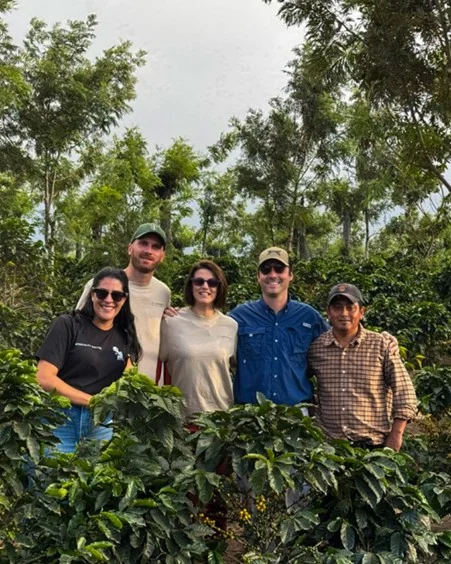
For those wondering where to buy a coffee that combines sensory excellence and deep social responsibility, Esperanto Specialty Coffee presents itself as a strategic partner in the Italian market. We are not a mass-market sales platform, but a direct bridge to the best international origins, managed with a vision of real sustainability.
International selection: we import high-specialty beans from the most prestigious regions in the world, ensuring that every lot meets rigorous ethical standards before being processed according to our vision.
Total flexibility: We understand that quality should not be limited by volume. For this reason, we allow the purchase of your bag of coffee without a minimum order, facilitating access to excellent raw materials for both small roasters and specialized customers.
Personalized: By not relying on an automated online store, we offer direct treatment that guarantees absolute traceability. Every order is handled personally to ensure the bean maintains its freshness and integrity.
Commitment to the Supply Chain: By choosing us, you are not just buying coffee, but supporting a structure that prioritizes the well-being of producers at the source and environmental conservation through an honest supply chain.
Ready to discover the excellence of Esperanto Specialty Coffee? Contact us now to order your first bag, with no minimum order, and enjoy an authentic and responsible taste experience.
Frequently asked questions about sustainable coffee
What are the best brands of sustainable coffee in Italy? While big names exist, specialized brands like Esperanto Specialty Coffee usually offer superior traceability and a niche quality that is hard to find in the mass market.
How does sustainable coffee help fight climate change? Coffee is one of the crops most vulnerable to global warming. Sustainable production helps mitigate this impact through the use of agroforestry systems (shade-grown coffee), which act as carbon sinks and natural thermal regulators.
Does sustainable coffee affect the taste and quality in the cup? Yes. Sustainable practices involve more careful cultivation, healthier soils, and better-controlled post-harvest processes, which result in more balanced beans and more defined aromatic profiles. Responsibly produced coffee not only protects its territory of origin but also allows its natural characteristics to be best expressed in the cup.
Does sustainable coffee require different brewing methods at home? No. Sustainable coffee can be prepared using the same traditional methods. The difference lies in the quality of the raw material and the care taken throughout the supply chain, not in the way it is prepared. Using good quality water and respecting the right proportions simply helps to bring out the best of its flavor.