
Coffee processing is one of the most decisive factors in defining the sensory profile and commercial value of the beverage. With the introduction of the new SCA Coffee Value Assessment (CVA) system, quality evaluation has evolved: it is no longer just about a “score,” but a detailed and objective description of the characteristics that make a coffee “specialty.”
Even before roasting, the way cherries are treated profoundly influences the aroma, body, and acidity—elements that are now analyzed through the descriptive and affective modules of the CVA.
What are the stages of coffee processing?
The transformation of the fruit follows a precise sequence to ensure product stability:
| # | Phase | Description |
| 1 | Cherry harvesting | This can be manual (picking), to select only high-quality ripe fruits, or mechanical, used in large extensive plantations. |
| 2 | Depulping | The outer pulp is separated from the seed using machinery that preserves the integrity of the bean. |
| 3 | Fermentation | The bean, covered in mucilage, ferments to develop its aromatic profile and eliminate sugar residues. |
| 4 | Drying | The beans are spread in the sun or placed in mechanical dryers until they reach an optimal moisture content of 10-12%. |
| 5 | Sorting and grading | The beans are divided by size and density, removing defects that could compromise the taste. |
| 6 | Transport and storage | The coffee is packed in protective bags to maintain freshness during the journey to the roasteries. |
Green coffee processing methods: natural, washed, and honey
There are several systems for treating the fruit, each of which imparts a specific identity to the beverage.
Dry coffee processing (natural method)
This is the oldest system: the cherries are dried whole. This process produces a coffee with greater sweetness, intense fruity notes, and a fuller body.
Wet coffee processing (washed method)
A very common system, it involves the total removal of the pulp before drying. The result is a profile with brighter acidity and extremely clean aromas.
Honey or semi-washed method
A middle ground where part of the mucilage remains on the bean during drying, imparting a balanced sweetness and unique complexity.
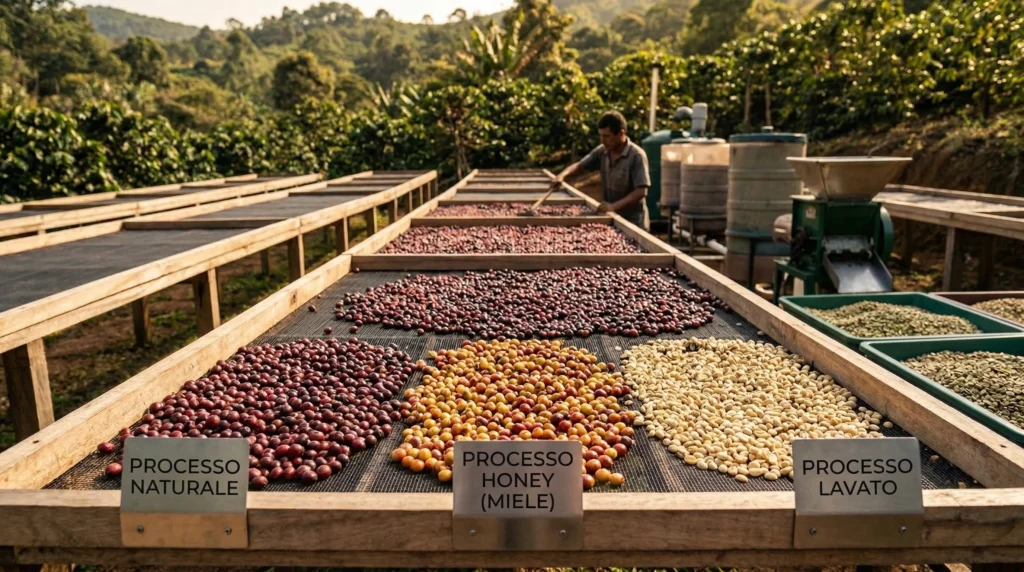
Differences between washed, natural, and honey methods
| Characteristic | Washed method | Natural method | Honey method |
| Process | Fermentation and complete washing | Drying of the whole cherry | Partial pulp removal (residual mucilage) |
| Profile | Clean, bright, and citric | Sweet, fruity, and winey | Balanced sweetness and soft acidity |
| Body | Medium / Light | Intense and syrupy | Creamy and balanced |
| Acidity | More pronounced | Softer and lower | Medium and complex |
How does processing influence the taste of coffee?
The chosen processing method is not just a technical stage, but a decision that directly affects the sensory experience of the final consumer. While washed methods succeed in enhancing a vibrant, citrusy acidity, natural methods aim to boost texture and greater fruity sweetness. According to the new SCA standards, a coffee is classified as specialty when, through a holistic evaluation, it shows an absence of primary defects (inventory assessment) and a distinctive sensory profile that meets superior quality requirements.
Furthermore, institutions such as the Coffee Quality Institute (CQI) emphasize that controlling fermentation and drying is fundamental to preventing chemical defects that could penalize the final cup score. With this analytical rigor, Esperanto Specialty Coffee carefully selects its origins by collaborating closely with producers who adopt sustainable and controlled processes.
What are the best machines for coffee processing?
Coffee processing requires specific machinery throughout the entire supply chain.
Among the main equipment we find:
- Depulpers: Machines used to separate the pulp from the bean.
- Dryers: Used to control the drying process.
- Optical sorters: Advanced systems that identify defects in the beans.
- Professional roasters: Fundamental tools for developing the coffee’s aromatic profile.
Where to buy professional coffee processing equipment in Italy?
Professional equipment can be purchased through:
- specialized distributors
- machinery manufacturers
- coffee industry trade fairs
- B2B platforms for the Horeca sector
Many Italian companies produce equipment recognized internationally for quality and innovation.
Green coffee suppliers in Italy
Green coffee suppliers play a central role in the supply chain.
These companies:
- import green coffee from producing countries
- collaborate with agricultural cooperatives
- guarantee quality and traceability
Many importers work directly with producers in countries such as Brazil, Colombia, and Ethiopia.
Esperanto Coffee’s commitment to the supply chain
In this ecosystem of suppliers and innovation, Esperanto Specialty Coffee stands out for its selective approach. They do not merely purchase beans, but choose origins where coffee processing takes place according to standards of sustainability and precision.
From the iconic plantations of Brazil, Colombia, and Ethiopia to Italian roasteries: every bean from Esperanto Specialty Coffee is evaluated according to Coffee Value Assessment criteria, ensuring that every cup offers an authentic, traceable, and superior value sensory experience.
Looking for specific profiles for your next roast? Contact us to request samples or to find out about the availability of our lots evaluated according to the CVA standard.
Frequently asked questions about coffee processing
How long does the coffee processing take? From one to four weeks depending on the climate.
Why is drying important? It prevents mold formation and stabilizes the aromas.
Can coffee processing correct a low-quality harvest? Unfortunately, no. If the raw material (the cherry) is not ripe or is of low quality, no processing method can transform it into specialty coffee. Processing serves to enhance the potential already present in the fruit, not to create it from nothing.
What is controlled fermentation? A technique to monitor temperature and bacteria in order to create innovative sensory profiles such as carbonic maceration.
Does processing affect caffeine? No, caffeine depends on the botanical variety (Arabica or Robusta).
How does processing affect environmental sustainability? The natural method is the most eco-friendly as it does not require water. Conversely, wet processing generates wastewater that must be treated correctly to avoid polluting local soils. Many companies today use water recirculation systems to reduce the impact.
What is “carbonic maceration” in coffee processing? It is an advanced technique borrowed from the wine world: cherries are placed in sealed stainless steel tanks saturated with carbon dioxide. This type of controlled fermentation creates incredible aromatic profiles, often with notes of tropical fruit or gummy candy.
How is coffee processed? The production process begins immediately after the harvest of ripe cherries. These contain the seeds that, after several stages, will become green coffee beans ready to be exported and roasted.