
Macroeconomic Analysis of the Coffee Market: Why Is the Price of Coffee Increasing?
The coffee market is experiencing a period of historic volatility that is redefining the industry’s rules. If we ask ourselves why the price of coffee is increasing, we must look to the origins: climate change has drastically reduced production in Brazil and Vietnam, generating a global supply deficit. Analyzing the price forecasts for this year, experts agree that upward pressure will remain strong.
For professionals evaluating commodities to invest in for 2026, commercial coffee has become a high-risk asset. This has a direct impact on café budgets: today, asking how much 1 kg of coffee costs for a café no longer yields the figures from three years ago. With Arabica prices hovering around 295 cents/lb, efficiency in bean selection is more critical than ever to maintain business profitability in the current coffee market.
What Are the Forecasts for the Coffee Market and How Much Will Coffee Increase?
While the commodity sector suffers, the specialty segment shows annual growth of 10.4%, projected for the 2025-2030 period. Faced with the uncertainty of how much coffee will increase, “Specialty Grade” stands out in the evaluation of which commodities to invest in for 2026, as its value depends on quality and not solely on stock market speculation.
2026 Trends in the Coffee Market: Beyond the Cup, the Experience
The Home Barista: Evolved in the Specialty Coffee Market
This segment represents customers who have transformed their homes into extraction laboratories. They are not simply seeking a beverage, but beans with complex sensory profiles and superior cupping scores. For this profile, the key to success in the current coffee market lies in offering 250 g formats and packaging with degassing valves, ensuring the absolute freshness and total traceability that today’s technical consumer demands.
The Conscious Consumer: Can People with Gastritis Drink Coffee?
Health is a determining factor for purchases in the new coffee market. A recurring question is: can people with gastritis drink coffee? Unlike industrial coffees with defects or excessive roasting, beans from specialty coffees (derived from meticulous processing methods) have a balanced organic acidity. This makes them gentler on the digestive system, allowing gourmet consumers to enjoy them without the discomfort associated with low-quality coffee.
Opportunities in the Coffee Market: How to Compete with the Cost of 1 kg of Lavazza Coffee
The price crisis is, in fact, the perfect moment for strategic differentiation. While major players in the coffee market struggle to keep prices low by sacrificing quality, artisan roasters have the opportunity to exit the “war of pennies.”
Observing how much 1 kg of Lavazza coffee costs or other industrial brands, the specialized roaster does not need to compete to be the cheapest. The opportunity in the coffee market lies in building a brand that educates the customer: explaining that a higher cost per kilogram translates into better profit margins per cup and brand loyalty unattainable for large industry.
Evolve in the Coffee Market with Esperanto Specialty Coffee
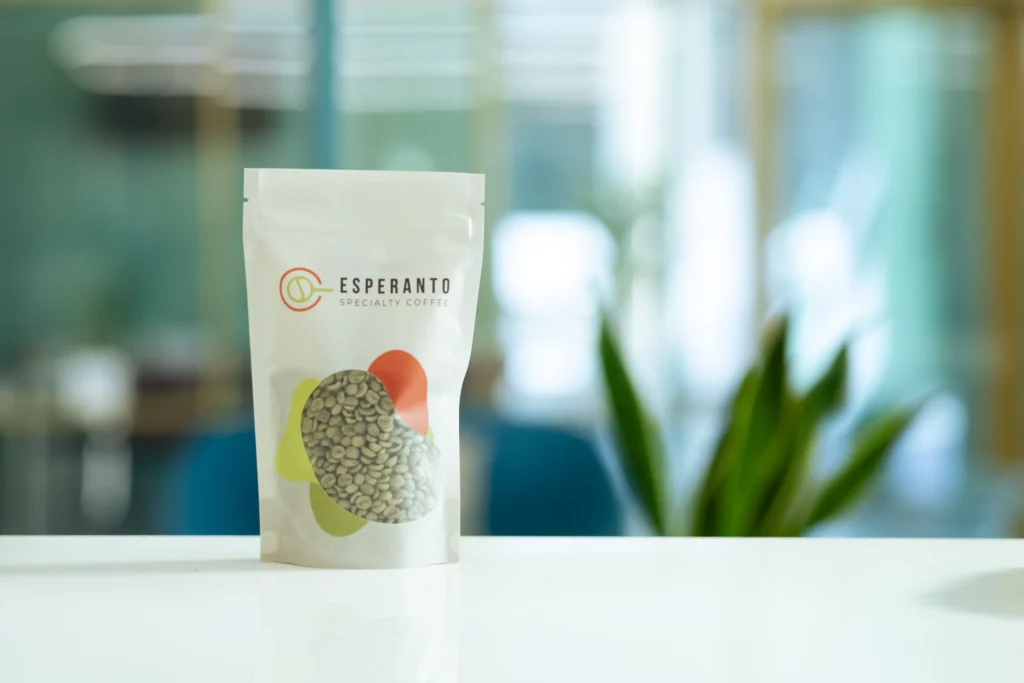
Success in the current coffee market requires a strategic transition toward quality. At Esperanto Specialty Coffee we collaborate with roasters to facilitate this change, offering lots that combine rigorous traceability with sensory profiles that justify the profitability of the specialty sector. More than a supplier, we are the technical partner for those seeking to transform market complexity into a competitive advantage based on excellence.
Contact us today and let’s design your next specialty coffee selection together.
Frequently Asked Questions About the Specialty Coffee Market
What is the difference between commercial coffee and “Specialty Grade” in the coffee market? Unlike commercial coffee, which is traded as a generic commodity, specialty coffee must achieve a score above 80 points on the SCA scale. In the current coffee market, this distinction guarantees a bean free of primary defects and a unique sensory profile that does not depend on mass industry fluctuations.
How does artisan roasting affect product freshness? Freshness is the pillar of the high-end coffee market. Artisan roasting is performed in small batches, allowing precise control of the temperature curve. This ensures the preservation of aromatic oils, offering superior quality shelf life compared to industrial processes that prioritize long-term storage.
Why Has Traceability Become Fundamental in the Modern Coffee Market? Today’s consumer is interested in origin: region, altitude, and even the producer’s name. For a roastery, offering traceable coffee is not only an ethical value, but a marketing tool that validates superior quality and builds a relationship of trust with the end customer in the coffee market.